AMD Zen, news and comments
-
To highlight:
- The FX did not exist.
- 3.4 Ghz no longer impress anyone.
- The Vega advance gave me secondhand embarrassment.
- We still do not know the prices.
- In the end I did not put on panties.
-
Well, I just watched the Ryzen presentation and it was really good, in summary I will say:
Comparisons against a 6900K
In the first test, they render an image and both are on par, a Ryzen at 3.4GHz without Boost and a 6900K at 3.2GHz with boost. The 6900K has a TDP of 140W, the Ryzen 95W.
In the second test, encoding a video in Handbrake, it took 54s on Ryzen, 59s on the 6900K.
In the third test against a 6700K, it was seen that it was not capable of playing Dota2 and capturing/encoding video for Twitch, it would cut out, but with the Ryzen it was smooth.
Prices are not known.
At the end they make a short Vega video where you can see playing the new Battlefront at 4k@60fps, although there wasn't much action in that scene...I think they promise a lot if they stick to what they have shown, at least, to put pressure on Intel and their prices.
MAIN: Ryzen7 3800X + RTX2070Super + Asus x470 StrixF + KFA2 HOF 16GB DDR4 4000 + NVMe Samsung 970 EvoPlus 500GB + Samsung 850Pro 512GB + Samsung 860QVO 2TB + Asus Xonar STX + Phanteks Enthoo Pro M Se + Seasonic Focus+ 650W
LAPTOP: Asus Strix G531GT Intel i5 9300H + GTX1650 4GB + 16GB DDR4 2666 (8x2) + NVMe 256GB + 1TB HDD
-
Ah, the render they do with the Ryzen and the 6900k that takes 34s they have uploaded it on their website so people can try it out:
Blender: https://www.blender.org/download
Project: http://download.amd.com/demo/RyzenGraphic_27.blend
MAIN: Ryzen7 3800X + RTX2070Super + Asus x470 StrixF + KFA2 HOF 16GB DDR4 4000 + NVMe Samsung 970 EvoPlus 500GB + Samsung 850Pro 512GB + Samsung 860QVO 2TB + Asus Xonar STX + Phanteks Enthoo Pro M Se + Seasonic Focus+ 650W
LAPTOP: Asus Strix G531GT Intel i5 9300H + GTX1650 4GB + 16GB DDR4 2666 (8x2) + NVMe 256GB + 1TB HDD
-
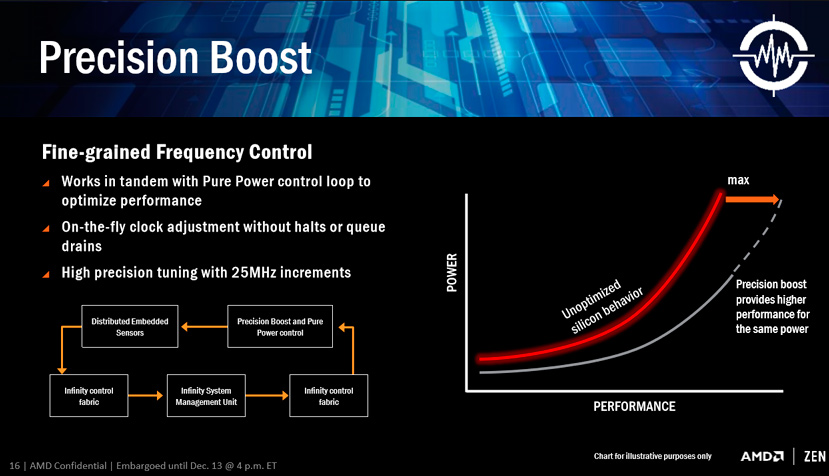
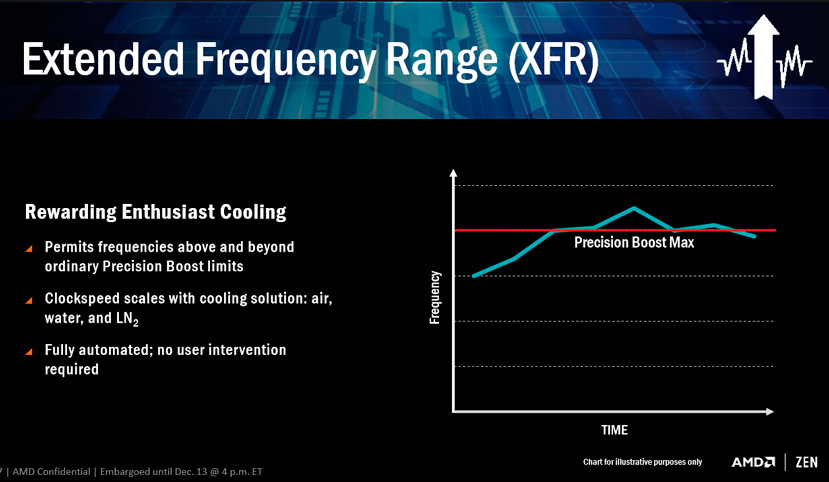
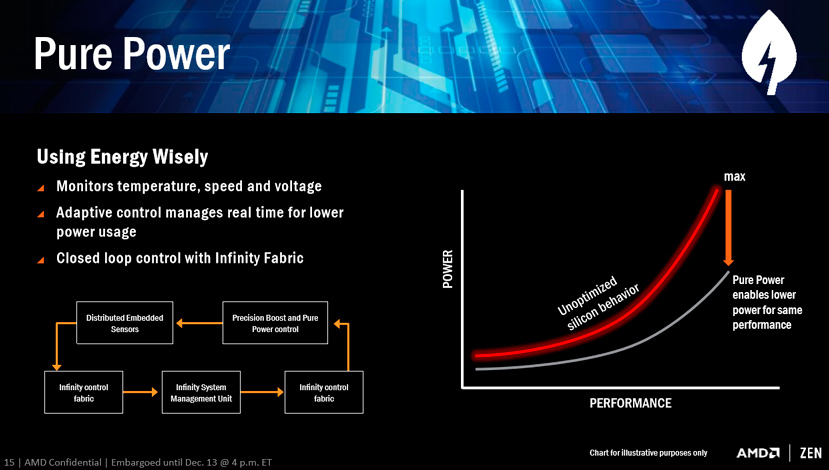
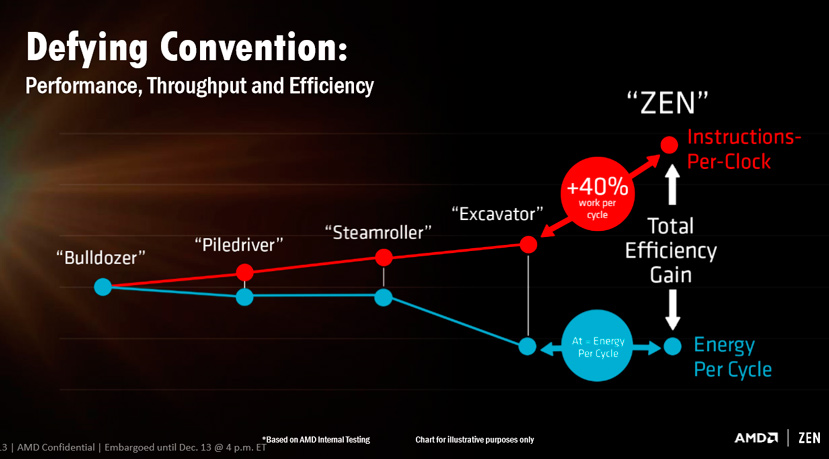
If I understand correctly, will Precision Boost + Pure Power make the automatic OC greater depending on the temperature (cooling) used?
The truth is that so far it doesn't look bad, but we will have to see the tests on the street. -
What was missing, now they don't even need us for the Olympics.
This world is going to the
And the truth is, it doesn't seem like it's going to be cheap.
-
I have made a little summary on the cover.
Everything indicates that the processor market could get interesting. But let's not forget that AMD is a company and, as such, its goal is to obtain the maximum possible profit. If the Zen perform as well as they present, their price will surely approach that of their Intel counterparts with a small discount for the fact that "they are not Intel".
Toda la actualidad en la portada de Hardlimit
Mis cacharros -
Anything that is a competition between Intel and AMD will be good for the market and for the end consumer. Personally and for the use I give to the PC I have the FX 8350 for a while, but I would like AMD to get closer to Intel, because since the FX range that already has a few years, they have not released anything moderately decent. The high range I don't care about, because I'm not one to buy high range, but if there were micros around 200-250€ maximum that were cool, it would be very good news. -
@Rules said in AMD Zen, news and comments:
Ah, the render they do with the Ryzen and the 6900k that takes 34s they've put it on their website so people can try it out:
Blender: https://www.blender.org/download
Project: http://download.amd.com/demo/RyzenGraphic_27.blendI RECIFY A DETAIL, you have to set the samples to 150, by default they come in 200.
My 4790k@4.6GHz configured to 150 samples takes 57 seconds to render the same work.
MAIN: Ryzen7 3800X + RTX2070Super + Asus x470 StrixF + KFA2 HOF 16GB DDR4 4000 + NVMe Samsung 970 EvoPlus 500GB + Samsung 850Pro 512GB + Samsung 860QVO 2TB + Asus Xonar STX + Phanteks Enthoo Pro M Se + Seasonic Focus+ 650W
LAPTOP: Asus Strix G531GT Intel i5 9300H + GTX1650 4GB + 16GB DDR4 2666 (8x2) + NVMe 256GB + 1TB HDD
-
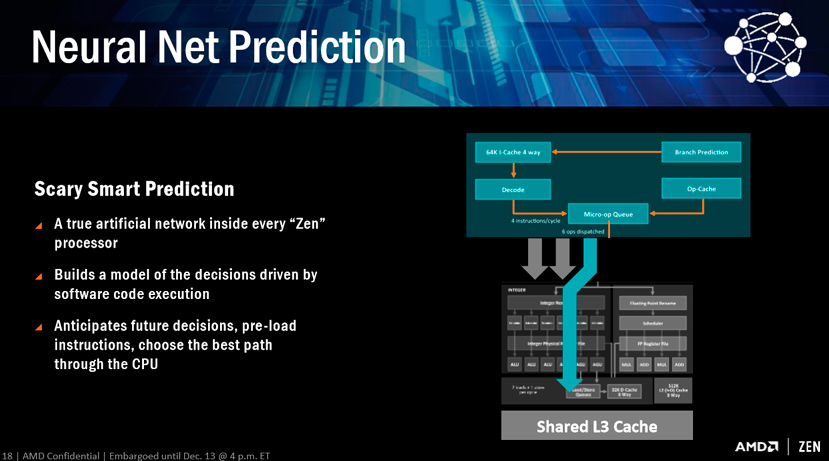
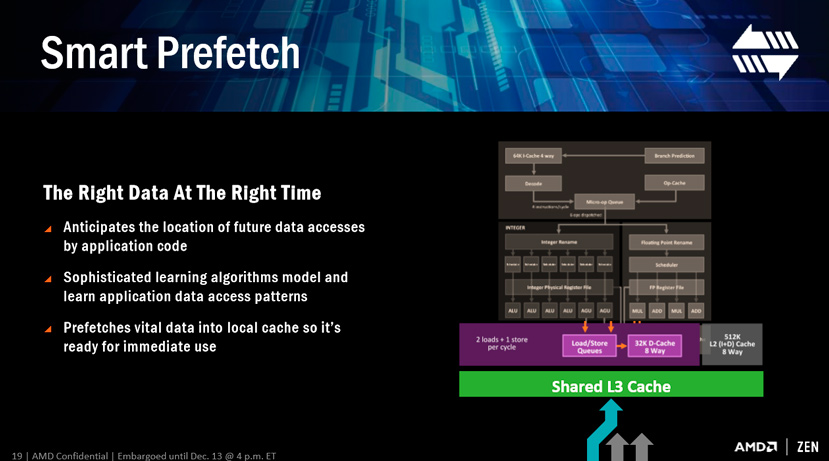
I am a Linux user and I am thinking about getting a Zen when they come out because AMD has been doing well with drivers for Linux lately. I have been reading about these processors for a few days and I am intrigued by the neural networks. No matter how much I search, I can't find details. But if I understand it correctly, the CPU will have a neural network that will make decisions about the execution of instructions? Does that mean I can train the processor to learn how to do certain tasks more quickly?
-
@palotes said in AMD Zen, news and comments:
I am a Linux user and I am thinking about getting a Zen when they come out because AMD has been treating Linux drivers well lately. I have been reading about these processors for a few days and I was intrigued by the neural networks. No matter how much I search, I can't find details. But if I understand it correctly, the CPU will have a neural network that will make decisions about the execution of instructions? That means that I can train the processor to learn to do certain tasks more quickly?
But they can only be trained with positive reinforcement, not like if you don't do them well I'll stop the fan for a few seconds... rather from the plan if you do well I'll raise the vcore by +0.05

P.D: Don't take much notice of me, at this time of the morning I still haven't fully fueled up

MAIN: Ryzen7 3800X + RTX2070Super + Asus x470 StrixF + KFA2 HOF 16GB DDR4 4000 + NVMe Samsung 970 EvoPlus 500GB + Samsung 850Pro 512GB + Samsung 860QVO 2TB + Asus Xonar STX + Phanteks Enthoo Pro M Se + Seasonic Focus+ 650W
LAPTOP: Asus Strix G531GT Intel i5 9300H + GTX1650 4GB + 16GB DDR4 2666 (8x2) + NVMe 256GB + 1TB HDD
-
@Rules But the neural networks are not for controlling cooling and frequency, right? It's for executing instructions. At least that's what I understood from @cobito's post. If that's the case, when the processor is used a lot for a task, over time it would get faster at that task. For example, if I use the processor to do intensive calculations on something specific, over time it would learn to do it faster. That's what I understand about the neural network that has been put on the Zens.
-
@palotes Yes, it's about executing instructions but the exact mechanism hasn't been specified yet, there are just the following two hypotheses:
-
Ranging from actual physical modelling of instruction workflow to identify critical paths to be accelerated (unlikely)
-
Statistical analysis of what is coming through the engine and attempting to work during downtime that might accelerate future instructions (such as inserting an instruction to decode into an idle decoder in preparation for when it actually comes through, therefore ends up using the micro-op cache and making it quicker).
-
-
@palotes said in AMD Zen, news and comments:
@Rules But the thing about neural networks is not for controlling cooling and frequency, right? It's for executing instructions. At least that's what I understood from @cobito's post. If that's the case, when the processor is used a lot for a task, over time it would get faster at that task. If for example I use the processor to do intensive calculation of something specific, over time it would learn to do it faster. That's what I understand about the neural network they put on the Zens.
Indeed, it's about executing instructions, but they didn't give more details, like how long this learning would last, if it was based on the last few seconds or the last few days, etc... Now, I suppose it could slightly speed up the process, but I doubt it would see more than a 5% improvement.
MAIN: Ryzen7 3800X + RTX2070Super + Asus x470 StrixF + KFA2 HOF 16GB DDR4 4000 + NVMe Samsung 970 EvoPlus 500GB + Samsung 850Pro 512GB + Samsung 860QVO 2TB + Asus Xonar STX + Phanteks Enthoo Pro M Se + Seasonic Focus+ 650W
LAPTOP: Asus Strix G531GT Intel i5 9300H + GTX1650 4GB + 16GB DDR4 2666 (8x2) + NVMe 256GB + 1TB HDD
-
Umm what an interesting thing. The bad thing is that it will be very difficult to be able to pass a test bench to this to know how much it yields. If it ends up being like this we will see if the traffic of trained processors to do X task does not begin :rofl:
-
To me, the whole thing about neural networks sounds more like a buzzword that they've pulled out of thin air as a marketing tactic.
Toda la actualidad en la portada de Hardlimit
Mis cacharros -
@cobito That's where the bullets are going.
The way I see it, the "thing" will basically work like the SSHD controller: it's based on priorities and access in processes (files in the case of SSHDs) and some predefined rules, for the pattern of which loads and which doesn't.But of course, if someone ends up thinking that there's a small computer inside the processor (it will simply be an algorithm), then it will undoubtedly sell better.
-
It sounds almost quantum to me, nonsense talk. And I feel bad for swearing, but I'm fine with what's there, that an x8 is fighting an x4. I just hope the prices are right. In our little hearts, we remember the arrival of 64 bits where AMD was crushing it xD
Now without jokes, for gaming Intel, for editing and calculation we'll see. I wouldn't bet a euro that they'll develop games for multiple threads, briefcase aside.
Editing: My brodel the brainiac (the shortest one for other things) developed a neural network in Excel. It was the typical quiniela calculation, called "Get rich project". It's enough that they didn't fail, they calculated many variables, just like those who set the game rules calculate them. I was talking about the move with my econometrics teacher and the guy said that if any project like that shows up even a little, at most it's worth selling it cheap.
So that's it, sell it cheap. Let's see if games come out that pull from HT and the x6 doesn't go through the roof...
Editing: What a fucking drunk I am. I thought the Ryzen was being compared to a Kaby x4 and I thought I saw it standing up to the x8 with double the dough...
I'm going to take a better look at those presentation tests.
-
They say that Zen will be manufactured by Globalfoundries (like AMD's chips so far) and Samsung.
Toda la actualidad en la portada de Hardlimit
Mis cacharros -
It seems that the Zens will come with the multiplier unlocked as standard.
Read more...
Toda la actualidad en la portada de Hardlimit
Mis cacharros -
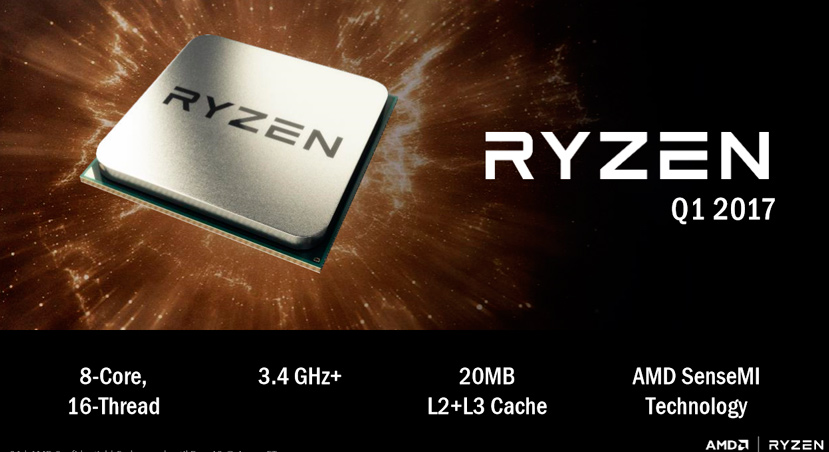
@cobito Well, if that's the case, a mini point for AMD. It's also mentioned that at CES 2017, the base frequency was 3.6 GHz and not 3.4 GHz as it appeared in the presentation (the 8-core one)... all that's left is for the IPC to live up to expectations.








Hello! It looks like you're interested in this conversation, but you don't have an account yet.
Getting fed up of having to scroll through the same posts each visit? When you register for an account, you'll always come back to exactly where you were before, and choose to be notified of new replies (either via email, or push notification). You'll also be able to save bookmarks and upvote posts to show your appreciation to other community members.
With your input, this post could be even better 💗
Registrarse Conectarse