Effect 2038 in 15 years
-
As of today, there are 15 years left before the 32-bit UNIX time counter overflows and we go back to January 1, 1970.
-
The 2000 effect was considered globally with quite less anticipation like this, but now more than ten years are missing. Not only can it be a very different transition, but there will be many novelties still on the way.But well guys at worst the tone modems in 2038 will surely be very cheap to produce and they will give them to you with the breakfast cereals

Salu2.
Ryzen 5 3600 - Tuf B550 pro - 2x 8g 3600c18 - Strix rtx 2060 - M2 1TB
-
So, those of us who still have some 32-bit Windows for old games and other retrocomputing issues, will we have to use it with the clock misconfigured by force starting in 2038?

Best regards!
-
@defaultuser said in Effect 2038 in 15 years:
The Year 2000 effect was considered globally with much less anticipation than this, so to speak, but now there are more than ten years left. It may not only be a very different transition, but there will be many new developments along the way.
But hey, guys, maybe the dial-up modems in 2038 will surely be very cheap to produce and they'll give them away with breakfast cereal
Regards.
In reality, for a long time in Linux, a 64-bit time_t structure has been used whose overflow will occur in the year 292 billion. The problem could come from all those 32-bit systems that someone installed once, the one who installed them retired 10 years ago, by 2038 he will have died and no one knows they are there, but somehow they are critical.
@sylver said in Effect 2038 in 15 years:
So, those of us who still have some 32-bit Windows for old games and other retrocomputing issues, will we have to use it with the clock badly configured by force from 2038?
Best regards!
The truth is that I don't know how it works in Windows. This move affects Unix-like (POSIX) systems like Linux. Perhaps they use the same system.
Toda la actualidad en la portada de Hardlimit
Mis cacharros -
@cobito Vale, I just tested it with Windows XP SP3, manually and offline advancing the date and time, and at first nothing happens because the system supports dates from 1980 to 2099.
However, it won't let you run Windows Media Player. It shows this message:
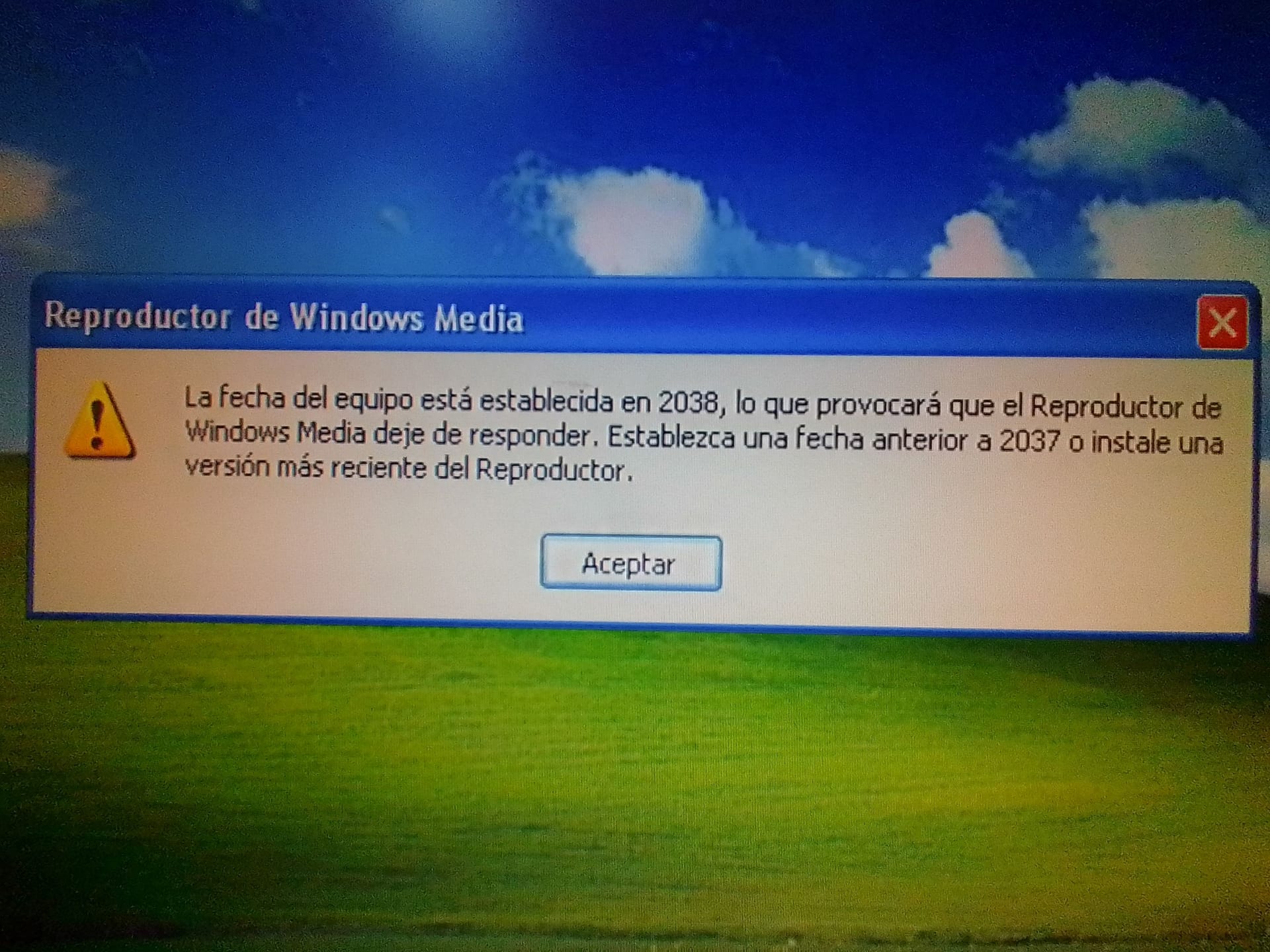
From what I've seen around, this same thing happens in later 32-bit versions of Windows.
However, I've hacked the error by leaving Windows Media Player open playing a song, I've changed the date and time to December 31, 2037 at 23:59:50 and let it change the year. It still works without any problems
 I can even manually change the date and time to other later dates without anything happening.
Saludos!
>> i7-2600K Sandy Bridge @4.4GHz || Noctua NH-D14 || ASRock Z77 Extreme4 || 4x8Gb G.Skill Ripjaws X DDR3 1600MHz || XFX RX 5700 XT 8Gb || SSD Samsung 850 PRO 256Gb & 850 EVO 500Gb || WD Caviar Green 1Tb || Barracuda 1Tb || Corsair TX650 V2 || M-Audio Fast Track Pro || KRK RP8 RoKit G3 || BenQ GW2750 27"
>> Athlon 64 X2 5600+ Brisbane @2.9GHz || Gigabyte GA-M61PME-S2 || 2x2Gb DDR2 Kingston 800MHz || Sapphire Radeon HD 5850 Xtreme 1Gb || Maxtor 320Gb SATA2 || OCZ ModXStream 500W Modular || TEAC PowerMax 120/2 || Acer X243w 24"
>> Intel Core2Duo E6600 Conroe @2.4GHz || Asus P5N32-SLI SE DELUXE || 2x1Gb DDR2 Kingston 800MHz || Asus nVidia GeForce 9800GT 1Gb GDDR3 || Seagate Barracuda IDE 80Gb 7200RPM || Linkworld LPK12-35 450W -
@sylver That's great. It's the first time I've seen the 2037 effect in a practical case and on a Windows XP at that. It's interesting that they left that message there. It's almost like an Easter egg waiting to be discovered 35 years after Windows XP came out.
Toda la actualidad en la portada de Hardlimit
Mis cacharros -
@sylver The player will have integrated policies or operations related to network, which in themselves cause the error, even if the system is working fine and the network cable is unplugged.
In theory, every time the player is going to start a medium with a system date out of range, this happens.
The problem is only with Unix, but the network works with Unix, so anything you want to do that uses internet time outside of that date range won't work
-
@cobito It is very good

Although I have the feeling that it may be a message inherited from the code of previous versions, since in practice I have put a later date and it does not affect it at all. It responds perfectly and can be manipulated further without exploding or freezing.@defaultuser That's what I think, the message only pops up when you try to start the Player while the date is already past the year 2037 and it won't let you start it. But it has been proven that it still works after the deadline if it was open previously, it doesn't trigger a 2038 effect as such.
Best regards!




Hello! It looks like you're interested in this conversation, but you don't have an account yet.
Getting fed up of having to scroll through the same posts each visit? When you register for an account, you'll always come back to exactly where you were before, and choose to be notified of new replies (either via email, or push notification). You'll also be able to save bookmarks and upvote posts to show your appreciation to other community members.
With your input, this post could be even better 💗
Registrarse Conectarse