First tests of Nvidia's 980 and 970
-
Well, well, well… just like Elp3, since I set up the SLI of 780Ti I'm somewhat disconnected... just enjoying the games without worrying about the tinkering... XD
Although seeing that you already have 4 bitches of these here, I'm sitting in the front row to see how they behave...
Thanks Elp3...! A hug and enjoy.
-
Bueno empecemos por algo:
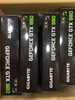
Muy interesantes esas Gigabyte, aunque sus 31cm no es para todo el mundo, al tener 2 conectores de 8 pins me da la sensación de tener mas potencial de OC que las otras customs.
Están montadas sobre socket 2011 o 2011-3?
Salu2.
-
Bueno, bueno, bueno… al igual que Elp3, desde que monté el SLI de 780Ti estoy algo desconectado... simplemente disfrutando de los juegos sin preocuparme del cacharreo... XD
Aunque viendo que ya tienes 4 bichas de estas aquí, voy sentándome en primera fila a ver cómo se comportan...
Gracias Elp3...! Un abrazo y a disfrutar.Si ya se te ve por steam con los juegos, en cuanto a estas graficas creo que ahora no te interesa cambiar por rendimiento, lo mejor es seguir con las 780ti hasta que salgan los 20nm y ya mirar un GM200 o 210, que es donde se debe ver una mejora grande.
Esas si que deben destacar con resoluciones altas, además deberían tener todas las mejoras de estas y alguna nueva, las 780ti siguen siendo unas bestias.
Saludos
-
Very interesting those Gigabyte, although their 31cm is not for everyone, having 2 with 8 pin connectors gives me the feeling of having more OC potential than the other customs.
Are they mounted on socket 2011 or 2011-3?
Regards.
They are reference ones Patagonico, I can't mount 4 customized ones.
First contact.
Unigine 1080p everything to the extreme and 8 layers of aa 1080p and an OC close to 1500MHZ with 0,5 v of extra voltage..
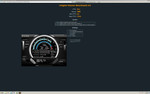

Not bad at all the result.
Regards.
uff, I made a mistake, I didn't put ultra in quality…then I do it..;) the lack of custom..jeje
-
Unigine doesn't seem to be its strong point, according to reviews, it runs like a 780Ti or close to it but it's not where they excel, you can see that tessellation no longer increases even though it's the performance chip, which isn't bad either, the big one should definitely stand out clearly.
What I find interesting is the DSR thing, I don't think that can be done with Kepler.
Regards
-
Patagonico is the reference, I can't mount 4 customized ones
Oh I didn't see any Gigabyte reference, even on their pages the only ones published are the custom ones
http://ar.gigabyte.com/products/list.aspx?s=43&p=52,53@53@53,62&v=1,8@1@2,29
Regards.
-
Ostia I didn't see any reference to Gigabyte, even on their pages the only ones published are the customs
http://ar.gigabyte.com/products/list.aspx?s=43&p=52,53@53@53,62&v=1,8@1@2,29
Saludos.
This is although maybe not even gigabyte has it on their website, they will have several websites, they will have it on the main one
Gigabyte GeForce GTX 980 4GB GDDR5 GV-N980D5-4GD-B Graphics Card
For SLI that cooler is very good.
Saludos
-
This is although perhaps not even a gigabyte on its website, it will have several websites, it will have it on the main one
Gigabyte GeForce GTX 980 4GB GDDR5 GV-N980D5-4GD-B Graphics Card
For SLI this cooler is very good.
Regards
Nice it reminds me of the Titan, I suppose the GTX 970 will be the same pointed design to keep it in mind.
Nvidia GeForce GTX 980 SLI / 3-way SLI / 4-way SLI review
http://uk.hardware.info/reviews/5623/nvidia-geforce-gtx-980-sli–3-way-sli--4-way-sli-review
Regards.
-
Bonita me recuerda a la Titan, supongo que la GTX 970 será mismo diseño apuntada para tenerla en cuenta.
Nvidia GeForce GTX 980 SLI / 3-way SLI / 4-way SLI review
http://uk.hardware.info/reviews/5623/nvidia-geforce-gtx-980-sli–3-way-sli--4-way-sli-review
Saludos.
Quiza con la 970 sea mucho mas difícil de ver ese disipador, la 770 no vi ninguna con el, solo al principio alguna reviews, vi alguna de referencia de MSI y es malo parecido al de 680, no se si veremos alguno, debe ser caro y no se lo ponen.
Las que veo aquí 970 ninguna tiene ese, la palit tiene uno de referencia pero malo.
http://www.aussar.es/tarjetas-graficas/saludos
-
Well, let's see, I have already passed it under conditions.
I preferred to use the MSI, since I am more familiar with it and you can increase the final boost frequency more, it has been around 1506MHZ.

I think the result is excellent.
Why? Because I used this test on purpose, since I know it is not their strong point, and even though it has been ages since I benchmarked this, and it is possible that there has been an improvement in drivers, I would be almost sure that a Titan or 780Ti should go above 1375MHZ to match/surpass this score. With the difference that those, especially the TITAN, would need to be done with modified bios, voltage up to the hilt and RLS. While here you take a reference card, you give it 100% to the fan, which does not pass in the 65º temperature test, you barely put voltage (I will explain the voltage issue later, more voltage is worse) and you don't change the bios, nor RLS nor anything.
I do not justify a change for anything, not even from 780 for this, but it has to be recognized that nvidia has done a great job with this thing... because it performs amazingly and consumes, already in these overcloks, like 150W less than the TITAN to give a similar score.
Best regards.
-
I already have them around here.
The TITAN are monsters, but it must be acknowledged that they haven't gone very far... I'm having problems with them and I haven't put voltaje.De on one for ages. In fact, I have no choice but to do an RMA on one already, because it's more broken than working.
That's one of the main reasons.Si. If all 4 were working at their full potential, I wouldn't even bother trying them out... but well, it's already impossible to find TITANs and besides, the price would be absurd.
I'll upload something later.
bye.
Well, it was already strange that you weren't interested in taking a look at graphics cards like these given that they seem to have come out so curiously, even though you had been a bit disconnected for a while. :troll:
I think you'll like them quite a lot even though at first glance you might see them as "weak" graphics cards against the more seemingly robust Titan (more VRAM, more bandwidth, more more... ), the general impression I've been left with from so many reviews and cameos with the little maxwell is that nvidia had found a way to greatly improve the original "mojo" of the kepler, to make them better where they were weakest and improve a little in everything else.
I already told you that the numbers aren't good companions to judge them, let's see how these ones go, but I think they'll surprise you more than disappoint, even though you're already used to similar levels of performance.
-
If you set that as the reference, the custom ones should go higher for having better phases, which seems like GPU-Z is wrong, it says 32 Rops and they are 64 I think, I guess it's a mistake.
They don't look bad because with 4 of those you won't have a power supply problem, nor will you need RL, I think we'll see a lot of SLI of these because you shouldn't need much power supply nor does it seem like the 256bits will be much of a bottleneck.
Also now you have to take into account that it still gets hot, now you can't watercool like in winter and even less with stock cooling, now the phases and the GPU get hotter, but these cards aren't bad, I'm going to try a 970 and retire the 480s that have already served their time, I'm not switching to a 780, I'll keep both.
Regards
-
Well, let's see, I have already passed it under conditions.
I preferred to use the MSI, since I am more familiar with it and you can increase the final boost frequency more, it has been around 1506MHZ.
I think the result is excellent.
Why? Because I used this test on purpose, since I know it is not their strong point, and even though it has been ages since I benchmarked this, and it is possible that there has been an improvement in drivers, I would be almost sure that a Titan or 780Ti should go above 1375MHZ to match/surpass this score. With the difference that those, especially the TITAN, would need to be done with modified bios, voltage up to the hilt and RLS. While here you take a reference card, you give it 100% to the fan, which does not pass the 65º temperature test, you barely add voltage (I will explain the voltage issue later, more voltage is worse) and you don't change the bios, nor RLS nor anything.
I do not justify a change for anything, not even from 780 for this, but it must be recognized that NVIDIA has done a great job with this thing... because it performs amazingly and consumes, already in these overcloks, like 150W less than the TITAN to give a similar score.
Best regards.
ELP3 leaving the fans below 75% what temperature do the graphics reach?
Will you try some game benchmarks to see the SLI 3-4 way scaling?
Best regards.
-
ELP3 leaving the fans below 75% at what temperature do the graphics reach?
Will you try some game benches to see the 3-4 way SLI scaling?
Best regards.
It's just an OC test. So I don't know..
The profile is superconservative, and they are quieter than any previous GTX that already eran.Es possible that below 75% it doesn't increase more than 4 or 5 º…
I'm going to set up the 4 Way. But first I'll see which one is the best to make master..
Best regards
-
It's just an OC test.So I don't know..
The profile is super conservative,and they are quieter than any previous GTX that already eran.Es possible that below 75% it doesn't increase more than 4 or 5 º…
I'm already going to set up the 4 Way.But first I'm going to see which one is the best to make master..
Regards
Don't forget to remove the mini-lid from the backplate of the ones that form a "sandwich".... it's supposed to make them breathe better in tight SLIs.
-
Don't forget to remove the mini-lid from the backplate of the ones that form a "sandwich"…. it's supposed to make them breathe better in tight SLIs.
I don't know if I should leave it..
That's a backplate, but it's true that it accumulates a lot of calor.Si if I see that they are going bad, I remove it.
Best regards.
-
It's just an OC test.So I don't know..
The profile is super conservative,and they are quieter than any previous GTX that already eran.Es possible that below 75% it doesn't increase more than 4 or 5 º…
I'm already going to set up the 4 Way.But first I'm going to see which one is the best to make master..
Regards
Do you test the OC well because for games there are times when the GTX 980s are mounted on the source? as for the reduction of consumption do you calculate that they should be around in the whole equipment?
Regards.-
-
What a powned you've got, right?, after saying against all odds that they were slower than the 780/Ti… :ffu::ffu:

Zap! That's the sound of that. 7.5% faster than the Ti, at 4K. The same as it beats at 1080p. And cheaper, by the way.
And with OC it gains more performance, out of the factory tight, nothing:

Given that it gains 14.6% with OC (a good OC anywhere in the world of GPUs), that multiplies the previous average result of 107.5% of a Ti, this is:
123% of the performance of a GTX 780 Ti (yes, and I refuse to explain that percentages do not add up, who does not know why should review their math).
Where are those cards that were going to be slower? Ayayayyy….
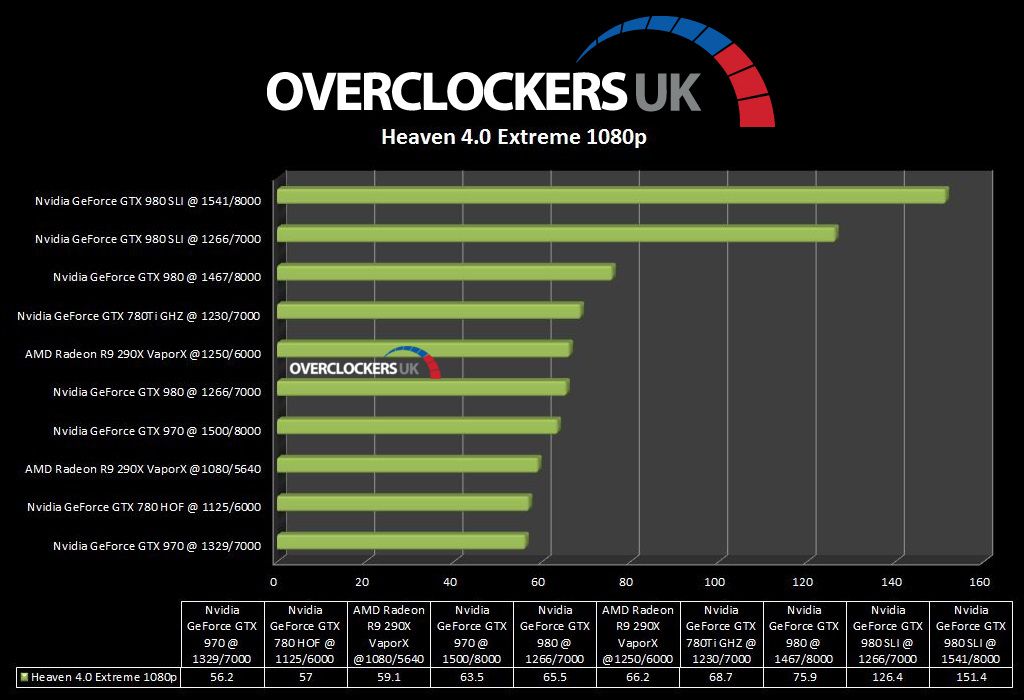
Sorry to tell you that from stock it is faster yes, has opted for the 2048 ccs to maintain consumption and raise clocks like crazy to be able to pass it, the problem you find when you see this:
http://i1145.photobucket.com/albums/o504/Gibbo205/HeavenExtreme.jpg
Same clock, 980 slower, voltage of the 780 ti 1.062v for the 1200 mhz, mine of course, they have to go up a lot the 980 in difference with the 780 ti to compensate for the power, so no kid, it is not more powerful in general terms, they have wanted to justify the 550 pavos giving as novelty its reduced consumption and speed.
And do not come with the excuse of different architectures, not to compare the mhz, in high end you look for the best performance, you squeeze everything you can/let, and seeing the average of oc in the 980 according to all the reviews I have seen I place them at 1400 mhz, the average in 780ti is at 1300 more or less.
The issue of 4k you should focus it from the point of view of the color compression that they have put and the anticipated suppression of the hidden pixels of Z (early z-culling), if not so possibly at more resolution it would come down due to the bus, since they increase the effective bandwidth and improve the general rendering performance.
For me a scam removing the consumption, we have not gained anything in performance.
Regards.
-
Well, let's see, I have already gone through it under conditions.
I preferred to use the MSI, since I am more familiar with it and you can increase the final boost frequency more, it has been around 1506MHZ.
I think the result is excellent.
Why? Because I used this test on purpose, since I know it is not their strong point, and even though it has been ages since I benchmarked this, and it is possible that there has been an improvement in drivers, I would be almost sure that a Titan or 780Ti should go above 1375MHZ to match/surpass this score. With the difference that those, especially the TITAN, would need to be done with modified bios, voltage up to the hilt and RLS. While here you take a reference card, you give it 100% to the fan, which does not pass the 65º temperature test, you barely add voltage (I will explain the voltage issue later, more voltage worse) and you don't change the bios, nor RLS nor anything.
I do not justify a change for anything, not even from 780 for this, but it must be recognized that nvidia has shone with this thing... because it performs amazingly and consumes, already in these overcloks, like 150W less than the TITAN to give a similar score.
Best regards.
That is a good point, to reach, click, increase voltage and perform very very well with low temperature and low consumption.
Totally agree with you on the rest XD.
-
I don't know if I should leave it as it is...
That's a backplate, but it's true that it accumulates a lot of heat.If I see that they are going bad, I'll remove it.
Best regards.
Mmm… I don't know if I've been understood, just in case, I'm referring to this small part of the backplate:
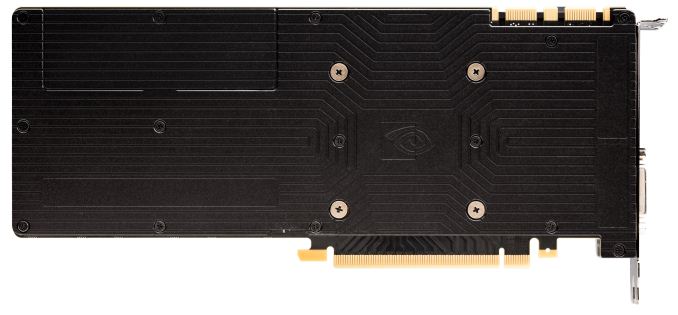
Which is removed by taking out the screw there and pushing the piece outwards:
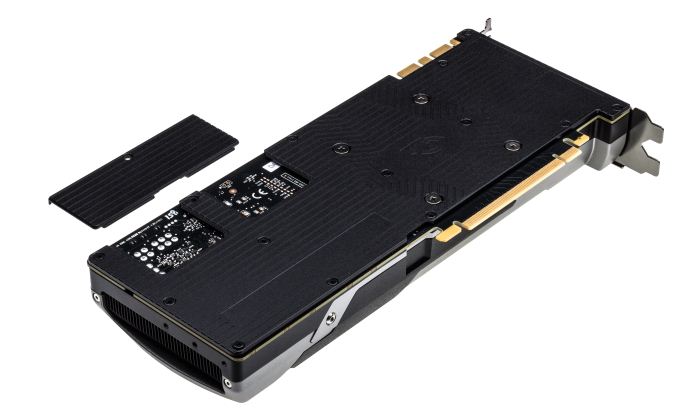
Nvidia says that with this minimal change, they can keep a backplate without hardly noticing the extra obstruction it might make in case of very close SLIs, since that area must give the margin for there to already be enough airflow towards the blower of the card that is right above the card from which that piece of the backplate is removed.
It's a pretty curious detail, possibly no one thought that at Nvidia they would be giving so much thought to the problem of using backplates with "close" SLIs, lol :ugly:


Hello! It looks like you're interested in this conversation, but you don't have an account yet.
Getting fed up of having to scroll through the same posts each visit? When you register for an account, you'll always come back to exactly where you were before, and choose to be notified of new replies (either via email, or push notification). You'll also be able to save bookmarks and upvote posts to show your appreciation to other community members.
With your input, this post could be even better 💗
Registrarse Conectarse